
Wisdom teeth, also known as third molars, are the last set of teeth to erupt in the mouth. They typically appear between the ages of 17 and 25, a time when people are considered old enough to have gained “wisdom.” Although some individuals never experience issues with wisdom teeth, the majority suffer from discomfort, infection, swelling, or misaligned growth. Because of this, many wisdom teeth eventually require removal.
Understanding why wisdom teeth cause problems, knowing the symptoms of impacted wisdom teeth, and learning about the removal and recovery process can help you feel more prepared and confident. Whether you’re noticing swollen gums, recurring infections, or sharp wisdom tooth pain, this comprehensive guide walks you through everything you need to know. It also helps you find the best dental care in Vizag, Srikakulam, and Vizianagaram for safe and comfortable treatment.

Wisdom teeth are the third molars located at the far end of the mouth. In ancient times, humans had larger jaws and tougher diets, so extra molars were helpful. However, modern diets and smaller jaw sizes mean there is rarely enough space for these teeth to grow properly.
Because of this limited space, wisdom teeth often:
These are called impacted wisdom teeth, and they are the most common reason people experience pain and require surgery.
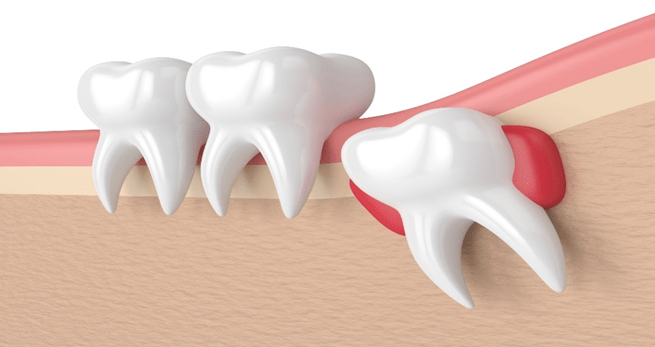
Wisdom teeth can lead to various issues for several reasons. Understanding these causes can help you seek treatment before the situation worsens.
Most people’s jaws simply do not have room for additional molars. As a result, the teeth push against existing teeth or gums, causing pressure, discomfort, and alignment issues.
When the teeth remain trapped under the gums or bone, they can cause:
Impacted teeth commonly require surgical removal because they cannot erupt naturally.
Wisdom teeth grow at the very back of the mouth. This makes them harder to brush and floss properly. As a result, food particles, bacteria, and plaque easily accumulate, increasing the risk of:
When the tooth partially erupts, a small flap of gum tissue forms over it. This flap becomes a pocket where food gets trapped and bacteria multiply. This condition leads to pericoronitis, a painful gum infection commonly associated with wisdom teeth.
Not every case begins with intense pain. However, several symptoms indicate that your wisdom tooth may be erupting improperly.
If you notice any combination of these signs, you should visit a dentist immediately to avoid complications.
Swollen gums around a wisdom tooth are often the first clue that a problem is developing. Swelling occurs because:
If left untreated, these swollen gums can progress into pericoronitis, which causes intense pain and swelling and may require urgent treatment.
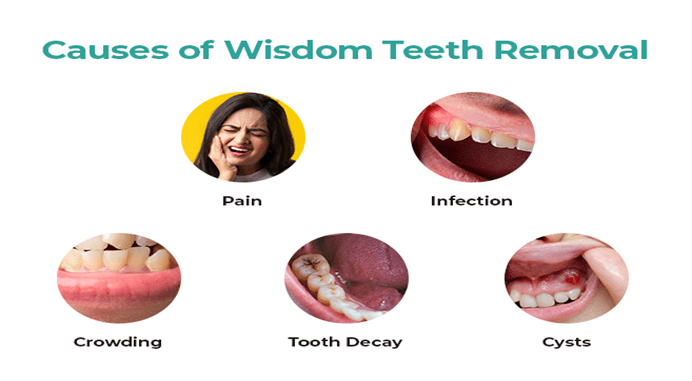
An impacted wisdom tooth is one that does not erupt in the correct position. It may grow:
Impacted wisdom teeth can lead to:
Since impacted teeth cannot be straightened or corrected, the only long-term solution is extraction.
A wisdom tooth infection can spread quickly and cause significant complications.
Without treatment, the infection can spread to the jawbone, throat, and even bloodstream. Early treatment helps prevent serious health risks.
A dentist or oral surgeon may recommend extraction when:
Removing the tooth early prevents severe problems later.
Wisdom teeth surgery is a very common procedure performed under local anesthesia, sedation, or general anesthesia depending on the complexity.
Most surgeries take 20–45 minutes.
Recovery depends on how complicated the surgery was. Simple extractions heal faster, while impacted ones take longer.
Following these guidelines helps ensure smooth and fast recovery.
If problematic wisdom teeth are ignored, complications may include:
Early removal is the best way to prevent these issues.
For safe and painless wisdom tooth removal, choosing the right dental clinic is essential. The best dental care in Vizag, Srikakulam, and Vizianagaram offers:
Professional treatment ensures a smooth procedure and a quick recovery.
Even though you cannot prevent wisdom teeth from erupting, you can reduce complications by:
Preventive care keeps wisdom teeth problems under control before they become painful emergencies.
Wisdom teeth often become problematic because of lack of space, improper eruption, or infection. However, with early detection and professional care, these issues can be managed effectively. Symptoms like swollen gums, wisdom tooth pain, and jaw stiffness should never be ignored.
Whether your tooth is impacted, infected, or causing discomfort, timely removal will prevent major complications. Understanding wisdom tooth surgery, extraction steps, and recovery tips helps you stay confident and prepared throughout the process.
With expert support from the best dental care in Vizag, Srikakulam, and Vizianagaram, wisdom teeth removal becomes a safe, painless, and comfortable experience. When you take action early, your smile—and your health—remain protected for life.